
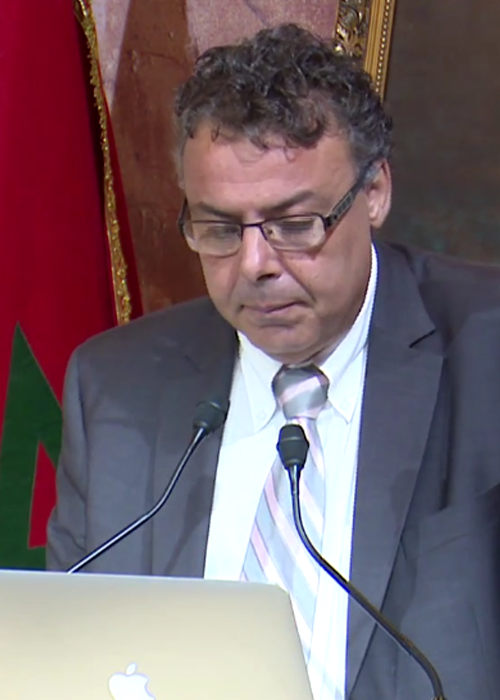
Abdelghani Chehbouni's research portfolio is characterized by a deep and broad exploration of hydrology, remote sensing, climate change, and agricultural water management. His work integrates advanced modeling techniques, field measurements, and satellite data to understand and address critical issues related to water resources, environmental sustainability, and climate impacts.
Hydrology and Water Resources Management
Chehbouni's research has extensively focused on the hydrological processes and water resource management in semi-arid and arid regions. He has developed and applied various models to evaluate evapotranspiration, soil moisture, and groundwater dynamics. His work on evaluating the performance of the WOFOST model for estimating evapotranspiration, soil water content, grain yield, and total above-ground biomass of winter wheat is notable for its application in estimating yield gaps and improving irrigation management in Morocco. Chehbouni's studies on groundwater quality, such as the assessment of groundwater contamination with nitrate in the Essaouira basin, provide crucial insights into the impacts of agricultural practices and climate change on water resources.
Remote Sensing and Advanced Modeling
Chehbouni has made significant contributions to the use of remote sensing technologies for monitoring and managing water resources. His research includes the use of high-resolution satellite imagery to monitor snow cover, evapotranspiration, and soil moisture. For instance, his work on the spatio-temporal fusion of Landsat and Sentinel-2 images for high-resolution monitoring of snow cover in the Moroccan Atlas Mountains demonstrates the application of advanced remote sensing techniques to improve water resource management. Additionally, his studies on machine-learning-based downscaling of climate data highlight the integration of artificial intelligence with remote sensing to enhance the accuracy and applicability of environmental models.
Climate Change Impacts and Adaptation
Understanding the impacts of climate change on water resources and agricultural productivity is a key theme in Chehbouni's research. He has examined the effects of climate variability on groundwater depletion, agricultural water demand, and soil erosion. His research on the future of land surface water availability over the Mediterranean basin and North Africa, based on the CMIP6 models, provides valuable projections that inform climate adaptation strategies. Moreover, his work on modeling the hydrological response to future climate change in North African watersheds helps in developing sustainable water management practices to mitigate the adverse effects of climate change.
Agricultural Water Management
Chehbouni's research also focuses on improving agricultural water use efficiency and sustainability. He has explored various approaches to optimize irrigation, such as using eddy covariance measurements to quantify evapotranspiration and crop coefficients for citrus orchards. His studies on the application of decision support tools for water governance in water-stressed areas highlight the importance of integrating scientific research with practical management solutions to enhance water use efficiency in agriculture.
Environmental Monitoring and Sustainability
Chehbouni has contributed to the development of tools and indices for environmental monitoring and sustainability assessment. His research on the development of a comprehensive assessment of satellite precipitation products for hydrological modeling in semi-arid basins, and the evaluation of soil salinity detection and mapping using remote sensing, provides essential methodologies for monitoring environmental changes and managing natural resources. His work on the impacts of emerging pollutants in Moroccan wastewater further underscores the need for sustainable practices to protect water quality.
Conclusion
Abdelghani Chehbouni's extensive research contributions have significantly advanced the understanding and management of water resources in arid and semi-arid regions. By integrating remote sensing, advanced modeling, and field measurements, his work addresses critical issues related to hydrology, climate change, and sustainable agriculture. His research provides valuable insights and practical solutions for improving water use efficiency, managing environmental impacts, and adapting to climate variability, making significant strides towards sustainable water resource management.