
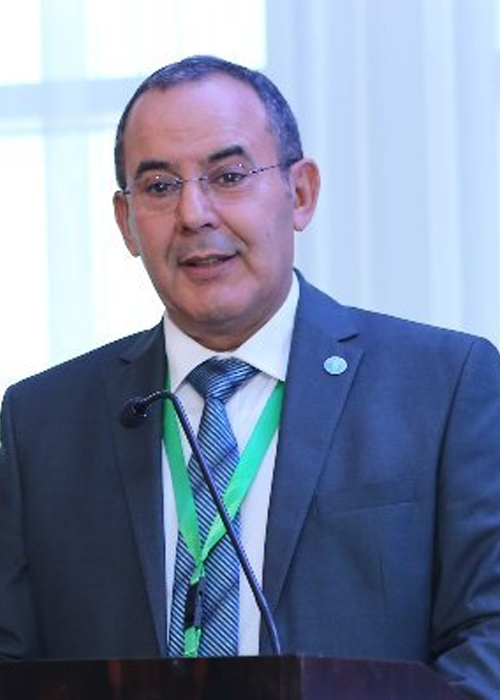
Rachid Serraj's research and professional portfolio reflect his extensive contributions to science leadership, agrifood system innovation, and sustainable agriculture. His work spans from managing large-scale international agricultural programs to conducting groundbreaking research in plant physiology and drought resistance.
Recent Work in Science Leadership and Management
Dr. Serraj has been instrumental in shaping global agricultural strategies through his work with the ISPC and FAO. He co-authored the influential book "Agriculture & Food Systems to 2050," which analyzes global trends, challenges, and opportunities in the agrifood sector. This work provides a comprehensive foresight into the future of agriculture, emphasizing sustainable practices and innovative solutions.
In his role as Delivery Manager of the Regional Initiative on Small-Scale Family Farming and Rural Transformation at the FAO Regional Office for the Near East and North Africa, Serraj coordinates initiatives aimed at improving agrifood systems through innovation. His leadership is pivotal in driving rural transformation and enhancing the resilience of small-scale family farming.
Leadership Roles and Program Management
As the Director of the Sustainable Intensification and Diversification (DSIPS) program at ICARDA, Rachid Serraj has led significant advancements in conservation agriculture. His contributions to the Conservation Agriculture research program have been documented in several key publications, including special issues on sustainable farming practices. Serraj's leadership extends to overseeing the Drylands Systems CRP, where he focuses on developing strategies for sustainable agriculture in arid regions.
At IRRI, Dr. Serraj spearheaded the multidisciplinary research program on drought frontiers in rice. His leadership in this program culminated in the publication of "Drought Frontiers in Rice: Crop Improvement for Increased Rainfed Production," a critical resource for understanding and improving drought resilience in rice crops.
Contributions to Agricultural Research
Dr. Serraj has significantly advanced research on drought and biological nitrogen fixation during his tenure at ICRISAT. His work is featured in the book "Symbiotic Nitrogen Fixation: Prospects for Enhanced Application in Tropical Agriculture," which explores the potential for improving nitrogen fixation in legumes to enhance crop productivity under drought conditions.
Early Career and Foundational Research
Earlier in his career, Rachid Serraj focused on the physiological mechanisms of drought stress and water management in crops. His research on root attributes affecting water uptake in rice and the impact of drought on legume symbiotic nitrogen fixation provided valuable insights into plant responses to water stress. Serraj's studies on root traits and their contributions to yield in chickpea under terminal drought stress highlighted the importance of breeding crops with enhanced root systems for improved drought resistance.
His work on innovative water management techniques, such as regulated deficit irrigation (RDI) and partial rootzone drying (PRD), demonstrated the effectiveness of these methods in conserving water while maintaining crop productivity. Additionally, his research on thermal infrared imaging for diagnosing and quantifying plant responses to water stress contributed to the development of precision irrigation management tools.
Conclusion
Rachid Serraj's extensive research and leadership have significantly advanced the understanding and implementation of sustainable agriculture practices. His work on drought resistance, biological nitrogen fixation, and agrifood system innovation provides a foundation for enhancing agricultural resilience and productivity in water-limited environments. Through his leadership roles and collaborative research efforts, Dr. Serraj continues to drive innovation and sustainability in global agriculture.